Monday, April 27, 2015

Book Review: Finding Me

Synopsis:

After a tragic accident claims the life of her father and stepmother, Kelli Huddleston discovers hidden documents in her father's office that prove her entire life has been a lie.

Determined to find the truth about her father and her true family, Kelli embarks on a journey that will lead to new friends, hard truths, and challenging decisions destined to change her life forever.


I didn't recognize Kathryn Cushman at first, but when I looked up her website, I realized I had considered reading a few of her books before but never got around to it. I was excited to be testing the waters in this first novel I've read by her.

Finding Me is a trembling story full of disheveled priorities and barred love. A story full of anger and forgiveness, it is one that grips you tight and has you missing your oven beeping to announce your dinner.

While beginning this book, I thought I had everything figured out and thought that while it was an enjoyable read, it wasn't going to be anything special. However, don't be fooled. Cushman folded and twisted this story just enough to capture my entire focus, and soon I was reaching for the tissues and realized I had read chapters 8-50 of this book in one day.

Not to say it wasn't entirely unpredictable, but what I appreciated about this story and its characters is how subtly they've been crafted. The dialogue is easy and believable, the chapters are short but far from choppy, and most of the characters are so real you might just wonder if the author researched your own neighbors.

I thought the relationships were unique in this story. Kelli Huddleston has a mission and it is not to make close friends, and that stuck throughout the story. Even with the possibility of a love interest, a romantic relationship isn't taken far or even in the picture until much later in the book. It was refreshing to read a Christian fiction story that didn't focus on a romantic entanglement.

Considering the Christian side, as this is Christian fiction, I thought the author handled this element well. I've become fairly picky when it comes to Christian fiction, so I appreciate when a story sticks to its beliefs without treating the reader like a naive child. That being said, verbally proclaiming the "gospel message" wasn't the focus of this story, but rather subtly shown in the lives of those around our protagonist. We are shown both ends of the spectrum and the ending is wrapped up neatly with a beacon of hope.

As far as contemporary Christian fiction goes, I've really only read one author of the genre in the past five years, so I'm anxious to discover more of Cushman's work in the future.

Rating: 4 out of 5

Have you read the book? What were your thoughts? Let me know in the comments!


**I received this book in exchange for an honest review.

Friday, April 24, 2015

Book Review: Someday, Someday, Maybe

Synopsis taken from Goodreads: 

Franny Banks is a struggling actress in New York City, with just six months left of the three year deadline she gave herself to succeed. But so far, all she has to show for her efforts is a single line in an ad for ugly Christmas sweaters and a degrading waitressing job. She lives in Brooklyn with two roommates-Jane, her best friend from college, and Dan, a sci-fi writer, who is very definitely not boyfriend material-and is struggling with her feelings for a suspiciously charming guy in her acting class, all while trying to find a hair-product cocktail that actually works. 

... It's hard to tell if she'll run out of time or money first, but either way, failure would mean facing the fact that she has absolutely no skills to make it in the real world...


I saw Gilmore Girls for the first time over the winter and enjoyed the show, especially Lauren Graham's performance, so when I saw that she had authored Someday, Someday, Maybe, I knew it had to be on my Christmas List (thank you, Gommie!).

The coming-of-age story of Franny Banks accurately depicts the anxiety, self-doubt, and wonderment of transitioning into adulthood and discovering yourself. Franny faces embarrassment, naive choices, and denial, all with the good hanging right in front of her eyes. It's a frustrating, comical experience that reminds you to step back and examine life, then trust your gut and leap forward with your dreams.

The author created an excellent character to represent common struggles women face, both personally and in the work place. I often cringed for or laughed with Franny Banks, but at the same time I will say she wasn't developed enough to the point where I felt a connection. I'm assuming this is a slightly autobiographical novel, and I wish Miss Graham had put a little more of herself into the character.

The story had it's flaws. Honestly, I had a hard time getting into the book, forgetting it for long periods of time on my bookshelf before picking it up again. It wasn't until Chapter 14 that things started happening and I began to have interest, but still I was just coasting through it. The ending wrapped up abruptly, and I was left saying, "That's it?" and back on my bookshelf it went.

Graham certainly has potential as a writer and I would read another book by her with the hopes that she had cleaned up some of her prose and developed characters. This book falls flat, but it still had an entertaining protagonist and comical moments that had me laughing out loud. ( And the book cover is one of my all-time favorites ;)  )

Rating: 3 out of 5 stars
(I will give a heads up that this book contains some language and sexual innuendo/situations)


Have you read the book? What were your thoughts? Let me know in the comments!

Friday, April 17, 2015

Writing and Depression

I've written many posts on techniques to get over dry spells in writing, conquering writer's block, where to get inspiration for stories and characters, etc. I want to do another encouragement post today, but I want to deal with something a step above writer's bock: Depression.


TRUTH: I have depression. I've struggled with it for 7 years. My depression stems from a brain injury, and for many years I didn't realize what it was.


How does depression affect writing?

1. Motivation. Depression sucks the energy from your body. In my personal writing, it's kept me from editing my fantasy novel draft; editing is hard enough itself, much less with a tired mind.

2. Stamina. Depression affects how long one can do something. I get tired easily, and that's not just a physical aspect. My brain often decides to "turn off" while I'm writing, saying "that's enough!" No matter how hard I fight it, once my brain clicks into off mode, there's hardly any chance of recovery that day.

3. Negative thinking. Another big one. Ever thought your writing was horrible, like you'd never become a great writer? I think this every time I go to write something. There are many times I avoid writing all together because I know if I get caught on one scene, one phrase, one grammatical issue, I will get so frustrated and depressed. That sounds drastic, but it's the truth. It's not me whining about my situation, it's not me pouting. My brain literally works differently since my brain injury, and in addition to the depression, I have a hard time working myself through or around problems.

4. Health. Depression and PTSD affect one's physical health. It's not easy writing when you have to take cold medicine that makes you sleep!


 Lately I've come across two ideas that have helped me to accept my writing once more, and I wanted to share those with you:

  • Write for yourself, not publication.   Publication has been my dream for years. When my depression halted my writing and editing, I realized my goal of being published wasn't going to take off for some time. I got depressed and stopped writing for quite a while. Then I realized my passion wasn't publication; it was writing. It's getting across a message. It is stories, characters, personal revelation. Once I stopped thinking that without publication there was no sense to keep going, I was able to connect again with my characters and gain back my confidence. Even if all my stories end up in binders lined up on my shelf, it'd still be pretty amazing.

  • No one else can write like YOU. I'm currently taking a course to improve my singing, and one of the tips I was given was to sing like myself because no one else has a voice like mine. I realized the same was true of writing; no one has a voice like you. Your stories are special. Your thoughts are unique. No one will view your story like you do.

    My guess is at least one of you reading this post struggles with depression, and if not clinical depression, you have had at one time or another severe doubts about your writing. So please remember your writing is worth it. Fight for your characters. Your voice is important. Pin these notes to your inspiration board and be reminded every day that YOU matter.


    Depression affects about 4% of the world's population — and that's just those who are diagnosed. Mental health is becoming a more recognized topic, between organizations like To Write Love on Her Arms and public figures such as celebrities stepping up to help destigmatize mental health, but still it's more than often hushed. Being an "invisible" illness, many people don't consider depression to be a real medical condition and don't understand how people can't just "get over it." If you think you or someone you love has depression, please reach out to someone, a parent, a friend, a doctor, and get the help you or your loved one needs. <3 

    Friday, April 3, 2015

    Fantasy vs. Contemporary

    My whole childhood was filled with fantasy. My parents indulged my love for fantasy (they were careful about what fantasy I read) and I grew up with it in my heart. I'm a firm believer in the part fantasy plays in the magical mind of a child. Fantasy helped me get through a lonely childhood and made me feel like I had a place I belonged. I spent hours reading, transported to lands unknown and making friends with centaurs and hobbits.


    When I first discovered a real love for writing, I was writing fan fiction (The Chronicles of Narnia, anyone?). I wrote fan fiction for about two consistent years before I took a break from writing fantasy only because I thought it might be immature (hello, awkward 15-year-old me). I wrote some historical fiction but still wasn't completely happy. Finally when I was 17/18 I went back to fantasy, this time creating my own characters and stories. I felt renewed in my writing and thought, "This is my niche."

    But life has a funny way of taking what you believe to be set in stone and turning it into mush before settling into a state of liquid gold.

    I finished my first fantasy novel draft in September of 2014, as some of you may know. I then began work on developing the next three books, taking a break from editing. I've recently gone back to the prequel's draft to start editing...and it's been a disaster. It's amazing how just one year can set your writing apart by leaps and bounds; I found that not only was my writing complicated and confusing, but I had way too many characters for the story's goal. I've since cut at least six characters, including deleting my main character and making a minor character my main character. I realized my book wasn't anywhere near completion, and I want to redirect the entire plot of the story.

    This often happens with first drafts, but it's exhausting and can be discouraging. I haven't given up on my story, but a lot needs to change before I can even start to think of rewriting.

    In the meantime, I've decided to start work on a contemporary novel that has been in my mind for about a year now. I practiced self control and only wrote scenes as they came to me rather than just jumping into a first draft. I have thought about it every day since coming up with the idea, have completed research, developed my characters to the point I feel like they are my friends (in the normal writer way, not creepy psychotic way I think), and have a solid idea of where I want to go with the story.

    When I started writing the first draft, I literally experienced shivers down my spine. I felt inspired, calm, confident even when I hit trouble spots. I've written three chapters using my special outline (which is basically making note of every little scene I want to include and in which order and from whose POV — I've hated traditional outlining since elementary school) and everything just feels right.

    Though I had many story ideas in the genre, I've never successfully written contemporary fiction because it felt awkward to me. I've always been comfortable with fantasy. To have that reversed has thrown me for a loop. I have no doubt my personal experiences have contributed to this, from getting my first job in 2013 and experiencing some "real-world" situations to my struggles with my mental health. I know what message I want to send through my stories, what characters I want to write. I feel like I can accomplish this best with contemporary fiction.

    That's not to say I'm not going back to fantasy at some point; I fully intend to write a fantasy series some day. All I'm saying is that if you're stuck, don't get discouraged. The right story will come along. It might be tomorrow, it might be ten years from now, but don't give up.

    I'm going to be entering part of this new story in a contest soon, so I will let you know how that goes! In the meantime, thanks for all your support on Twitter! It's been a fun week :)


    Wednesday, March 18, 2015

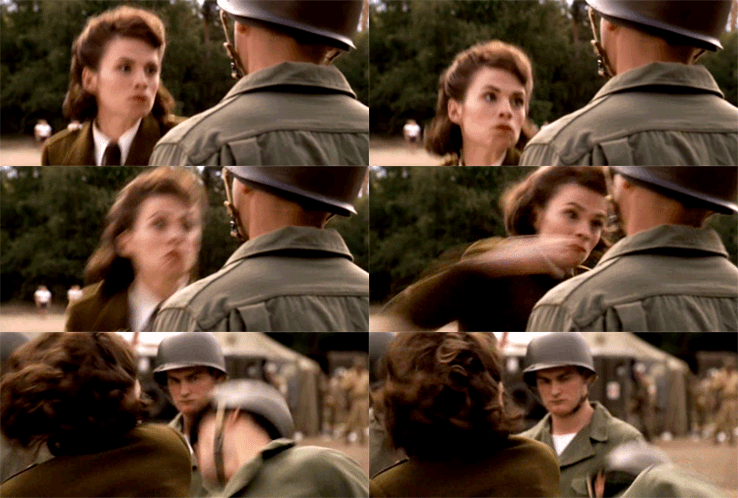
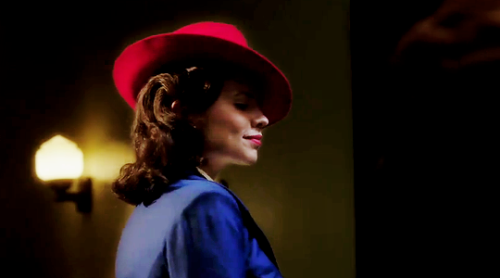
    Agent Peggy Carter: Strong Character or Predictable Shell?

    Agent Peggy Carter from the Marvel universe was one of the most highly requested characters to examine in my Strong Female Characters study. I admit, I wasn't completely familiar with the character, having only seen her in Captain America movies, so I also quickly caught up on the new TV show Agent Carter. (I haven't read any comic books, so if you were wanting me to draw from that, my apologies.) I might still disappoint some of you, but let's jump into it...


    Agent Peggy Carter


    Margaret "Peggy" Carter is an agent for the Strategic Scientific Reserve (S.R.R), the top secret Allied war agency during WWII. From the movie and TV series, not much is known about her past, which you could argue is consistent with her character; she is a woman of mystery, and hates revealing personal details unless completely relevant. 

    Her greatest struggle seems to be the gender politics after WWII. Having been greatly involved in the war, the men are now home, and her position has reversed. Instead of pulling her weight alongside generals, she is now pushed to "secretary mode" and spends her days taking lunch orders. She faces sexism with surprising grace, however, biding her time. 


    Despite the frustrations she faces at work, she still takes her work seriously and buries herself into it, perhaps a little too much. She is intelligent, observant, and wildly independent. At the same time, she is grieving. The TV show takes place after Steve Rodgers a.k.a Captain America "dies," and she pushes her feelings aside and in doing so pushes friends aside. She does eventually acknowledge her weakness, however, and mends fences. 

    She isn't a robot; she doesn't open up easily, but she still cares. Her friend is murdered; she cries. A colleague she disliked is murdered; she cries. She sticks up for friends when they are threatened, doesn't crack under pressure, and she takes care of herself.

     How does she appear to others? 

    • Mention already, there's the sexism in the late 1940s. To the recruits, she's a woman not to be taken seriously (which she quickly dissolves). 


    • To her commander, she is one of the leaders.
    • To her colleagues, she's viewed as a secretary, not a fellow agent. She's not "up to snuff." 
    • To Steve Rodgers, she's first an ally, someone who can relate to doors being slammed in one's face, and eventually she's a woman to be admired and loved. 
    • To her enemies, they soon learn she is not to be messed with. She packs a punch, has amazing aim, and can take down a group of highly skilled SSR agents with surprising ease. 


    "Not bad, for a girl."
    "I hate you all." 
    --Agent Carter


    Things that make us love her:


    • She is not a whiner; she takes care of the problem. 
    • She doesn't care what others think; she knows what she's worth and that's enough. 

    "I know my value. Anyone else's opinion doesn't really matter." 
    -- Peggy Carter, Episode 8 


    • She can do 107 one-armed pushups.
    • Appreciates people who have morals. 
    • She stands by her actions. 
    • She can see the value in others. 


    Now...what is WRONG with this character?
    A flaw of the TV show, Agent Carter, is that Peggy is a predictable character and the only woman in the SSR. Obviously this was done for a reason as focus the attention solely on her and the sexism of the day. However, this makes everyone — the character, the viewers — view her as "the only one for the job," which in turn makes the character appear hoity-toity, as though she is leaps and bounds above others. This contradicts other attributes we see, such as valuing others and herself (yes, it is possible to write a character who doesn't care what others think of her without making her appear self-righteous). 

    As mentioned before, she also has no background, at least none that was seen in the movies and entire TV show in which she appears. No background, no foundation, no connection. A character might be likable without background, but it's hard to take someone seriously if you don't know where they are coming from. 


    What was done RIGHT?

    She can be friends with other women. Many times these types of loner characters who are surrounded by men all day and defined simply as "tough" are depicted as unable to carry friendships with women. This is one place where Peggy Carter doesn't place herself above others.

    And again, though she tries to hide her emotions, we are still shown she has them. She loves, cries, worries, is frustrated, is impulsive, etc. This helps to balance the fact we don't know her backstory as these are emotions we can relate to. 


    What can we take away from this character? 

    Overall, Peggy Carter is an admirable woman with many good qualities, but in my opinion, she's weak as a character. 

    All of us want someone we can look up to. Give your character at least a few strong qualities that we can relate or aspire to, whether it's internal (fearless, patience, being completely comfortable in one's own skin, etc.) or external (stamina, incredible fighting skills, etc.). 

    Remember to provide background for your character. You don't have to go into great length in the story; you don't even have to reveal everything to the supporting characters. Glimpses here and there are good. Perhaps her father left her as a child. Maybe she had to retake the driver's examination test three times. The reason she's obsessed with eating healthily and exercising is because her friend died of cancer. A character without foundation is a pretty but empty shell. 


    If you are familiar with this character and have differing views, don't be shy to post your opinions in the comments. I'd love to hear what you think.

    Please feel free to give any other suggestions on female characters to study! Comment below or use one of these ways to contact me. 

    Thursday, March 5, 2015

    Books for Sale

    Hello all! I've just put some listings up on ebay (ah, how I love being unemployed). If you're interested, there are some books, but also a few tops and a DVD. Here's what I have for books :


    Though Waters Roar by Lynn Austin (I purchased this book off a sale rack myself, so there are some visible flaws to the book but the pages are in great shape. More details on the selling page). Christian Fiction


    Heartland Heroes by Andrea Boeshaar (this is a three-in-one book — they are always a fun read). Christian Fiction


    Unspoken by Dee Henderson Christian Fiction (One of my favorite Christian fiction authors)


    In Every Heartbeat by Kim Vogel Sawyer Christian Fiction (Another personal favorite Christian fiction author)


    A Draw of Kings, Book 3 of The Staff and the Sword, by Patrick W. Carr Christian Fiction


    The Death of King Arthur: The Immortal Legend by Sir Thomas Malory, a retelling by Peter Ackroyd. This book doesn't sugar-coat the myths, but it is good if you're introducing the stories to an older  preteen/young teenager who has a hard time otherwise with King James language.


    Most of the books are at a fixed price, but for the higher priced ones I do have the option open for people to send me a best offer for consideration :)


    I'm just going to include my seller page in case you are interested in checking out the other items. The clothes are in great shape and the movie is a fun chick flick. http://www.ebay.com/usr/us.sarahc?_trksid=p2047675.l2559  Thanks everyone!

    Monday, March 2, 2015

    Character Names: List #3 — Slavic

    It's been a while since I've done a new character names list, but as I'm in the middle of research for my next post on female characters, I figured this was the perfect opportunity to create another one.


    I've recently come up with a new story idea, and a few of the characters have a Slavic background. My mind has been a little obsessed with the idea, so here is a list of Slavic-derived names. Perhaps you too shall consider adding a little Slavic history to a character in your story?

    **All of these names come from The Writer's Digest Character Naming Sourcebook, Second Edition. If you don't own this book, go buy it. It's literally an essential for any writer!**


    FEMALE:


    Ana - meaning : One who will be reborn;  origin : Russian (form of Anastasia)

    Dana - meaning : God is my judge; origin : Czechoslovakian (form of Daniel)

    Eliska - meaning : Truthful ; origin : Czechoslovakian

    Irena/Irina - meaning : Peace ; origin : Russian (form of Irene)

    Ivana - meaning : Gracious God ; origin : both Russian and Czechoslovakian (form of John)

    Jarka - meaning : Spring ; origin : Slavic

    Krasava - meaning : Beautiful ; origin : Czechoslovakian

    Lilia - meaning : Mauve ; origin : Slavic

    Marya/Marika - meaning : Bitter ; origin : Slavic (form of Mary)

    Milena - meaning : Favored; origin : Czechoslovakian

    Natasha - meaning : Born on Christmas ; origin : Russian (form of Natalie)

    Nesha - meaning : Pure ; origin : Russian (form of Agnes)

    Varya - meaning : Stranger ; origin : Russian

    Zenya - meaning : Well-born ; origin : Russian  (form of Eugene)


    MALE:


    Adam - meaning : Of the red earth;  origin : Czechoslovakian

    Adrik - meaning : Dark ; origin : Russian

    Casimir - meaning : Destroys peace ; origin : Slavic

    Cestmir - meaning : Forest; origin : Czechoslovakian

    Dimitri - meaning : Spring ; origin : Russian (from Demeter)

    Karel/Karol - meaning : Manly ; origin : Slavic (form of Charles)

    Miklos - meaning : Victory of the people; origin : Czechoslovakian (form of Nicholas)

    Misha - meaning : Who is like God ; origin : Russian (form of Michael)

    Reznik - meaning : Butcher; origin : Czechoslovakian

    Stefan - meaning : Crowned in victory ; origin : Russian (form of Stephen)

    Viktor - meaning : Victorious ; origin : Czechoslovakian

    Vilem - meaning : Resolute protector ; origin : Czechoslovakian (form of William)

    Yakov - meaning : Supplanter ; origin : Russian  (form of Jacob)

    Ziven/Zivon - meaning : Lively ; origin : Russian